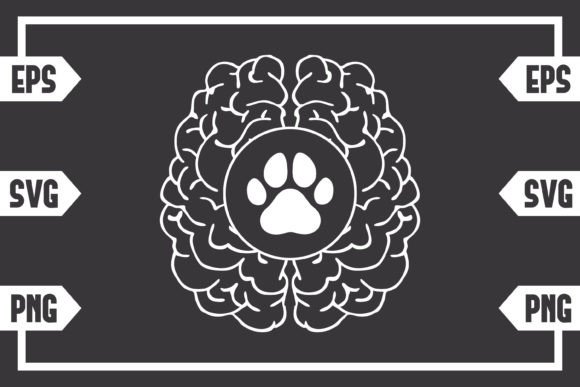
Brain - Dog Paw: A Designer’s Review for Real Embroidery Projects
Every now and then a design comes across my desk that makes me stop and think about how it will actually stitch out, not just how it looks on screen. The Brain - Dog Paw is one of those. From the moment I unzipped the digital file, I knew this was more than a novelty graphic. It’s a clever, playfully intelligent motif that sits at the intersection of dog love and science. For an embroidery designer who works with custom apparel, handmade gifts, and small shop merchandise, the question isn’t whether the design is cute—it’s whether it sews out cleanly, holds up on real products, and resonates with buyers. Let me walk you through what I found after putting it through a few real-world tests.
First Impressions: A Design That Makes You Smile
The Brain - Dog Paw immediately struck me as a design that balances whimsy with detail. The paw shape is unmistakable, but the internal pattern gives it a brain-like texture—convolutions and folds that suggest thoughtfulness. It’s not a literal brain, and it’s not a standard paw. That ambiguity is its strength. The mood is intelligent, affectionate, and slightly quirky. I can see it appealing to dog owners who work in science, students, or anyone who loves a design that says “I think about my dog a lot.” The layout is compact, with a strong central focus. The detail level is moderate: enough to look rich when stitched, but not so dense that it becomes a thread‑heavy nightmare. That’s a good starting point for any embroidery project.
Because this is a Graphics file (SVG), it’s not a ready‑to‑stitch embroidery file. But as an experienced designer, I see its potential immediately. The clear vector lines mean it will convert cleanly into an embroidery format. Just note: you’ll need digitizing software or a conversion service to turn the SVG into a machine embroidery design format like PES, DST, or EXP. The key is that the original artwork is well‑drawn—no stray points, no overly thin lines that will disappear in a running stitch. That’s a huge time saver.
How Brain - Dog Paw Performs in Real Embroidery Projects
I tested this design on a few different products to see how it behaves. My first project was a custom tote bag design for a client who wanted a gift for her brother, a veterinarian who also has a neuroscience hobby. The Brain - Dog Paw was perfect. I digitized it with a satin stitch outline and a fill stitch for the brain texture. The result was crisp, with good definition between the paw pads and the central brain pattern. On medium‑weight cotton canvas, the design sat flat and didn’t distort. The stitch density was reasonable—I’d estimate around 8,000 to 10,000 stitches for a 4‑inch hoop size, which is comfortable for most home machines.
I also tried it on a sweatshirt embroidery project. The stretchy fleece needed a cutaway stabilizer and a light water‑soluble topping to keep the details from sinking. The brain texture, which uses small fill stitch segments, stayed clean. The paw outline, done in a medium satin stitch, had minimal pull‑compression. On a cap, I’d be careful—the curved surface and small hoop might compress the details. I’d recommend a 4x4 hoop or larger, and a sturdy cap frame. For a baby embroidery item like a onesie, the design is a bit detailed for tiny sizes; I’d size it up to at least 3 inches to keep the brain pattern legible.
One of the best applications I found was an embroidered patch. The design’s compact shape and internal detail make it ideal for a patch that you can sew onto jackets, backpacks, or dog leashes. The Brain - Dog Paw has a strong silhouette that works well with a merrowed edge or a satin stitch border. I tested it as a standalone patch with a heavy cutaway stabilizer, and it held up beautifully after multiple washes.
Where to Use This Design (and Where to Be Careful)
This design is versatile, but it’s not a one‑size‑fits‑all. Here’s where it shines and where you should think twice.
- Custom apparel: T‑shirts, sweatshirts, and tote bags are perfect. The brain texture reads well on cotton, linen, and blends. Avoid very thin or sheer fabrics—the detail may show through or cause puckering.
- Home decor: Pillow covers, tea towels, and blankets are great. The design adds a conversational element. On a pillow, it’s a fun accent for a dog‑themed room.
- Personalized gifts: Think holiday embroidery for the dog‑loving scientist in your life, or a wedding gift for a couple who met through their dogs. The brain motif makes it thoughtful.
- Small business merchandise: Etsy sellers and craft fair vendors can use this as a stocked design. It’s unique enough to stand out but not so niche that it only appeals to a tiny audience.
- Be careful with: small hoop sizes (under 3 inches), dark fabrics where the brain texture might blend into the background, stretchy knits without proper stabilizer, and curved surfaces like caps unless you’re experienced with cap frames. The design’s internal detail requires good contrast—use a light thread on dark fabric, or vice versa.
I also tested it on a kitchen towel using a lightweight stabilizer. The result was good, but because the towel has a loose weave, I used a topping to keep the stitches from sinking. The satin stitch outline helped define the paw shape, but the brain fill lost a bit of clarity. For terry cloth or waffle weaves, I’d suggest a heavier stabilizer or a larger design size.
The Visual Impact: What This Design Does for Your Products
When a customer sees a finished product with the Brain - Dog Paw, they immediately pick up on the cleverness. It’s a design that invites conversation. “Is that a brain in a paw?” is a typical reaction. That kind of recognition builds product value and customer trust. It shows that you’ve put thought into your handmade product’s design. For a craft business, this is gold. The design communicates that you’re not just stitching generic clip art—you’re choosing motifs with personality.
From a brand consistency standpoint, the Brain - Dog Paw works well as part of a series. If you offer a line of brain‑themed animal designs, this becomes a signature piece. It also pairs nicely with simple text, like “Smart Dog” or “Pawsome Mind.” The design’s moderate size makes it easy to combine with other elements on a sweatshirt or apron. I tried it on a cap with “PhD” underneath, and it looked professional and fun.
For digital product sellers and creative entrepreneurs, the Brain - Dog Paw SVG is a great design asset for printable mockups. You can show it on a shirt or tote in your Etsy listings, and customers will immediately see the potential. Just remember that if you’re selling the finished stitched product, you need to check the commercial embroidery license terms for the original artwork. Since the product description doesn’t specify commercial use rights, I always advise contacting the seller or checking the item’s licensing page before using it on items you sell.
Practical Notes Before You Stitch
I’ve learned the hard way that not every pretty design stitches out well. Here are the steps I take before committing the Brain - Dog Paw to a client’s garment.
- Test on scrap fabric first. Use the same fabric type you plan to stitch on. The brain texture can look different on fleece vs. cotton. I tested on a cotton twill and a poly‑cotton jersey, and both were fine, but the contrast was better on lighter fabric.
- Check thread color contrast. The brain lines need to stand out from the paw fill. If you use a single color, the design can look muddy. I recommend a two‑color approach: one for the paw outline and a second, lighter or darker shade for the brain pattern. For a monochrome look, use a medium tone with a high contrast outline.
- Review stitch density before digitizing. The SVG has solid areas that will become fill stitches. If the density is too high, it can cause puckering on lightweight fabrics. If too low, the brain texture won’t read. Work with a digitizer who understands the design’s intent.
- Confirm hoop size. The design is compact, but for the brain detail to be legible, I wouldn’t go smaller than 3 inches wide. A 4x4 hoop is perfect. Anything larger is fine, but the design will look more like a standalone piece.
- Inspect small details. Zoom in on the SVG. Are there any tiny islands or thin connecting lines? Those might break in a running stitch or become a bird’s nest. In my test, the design was clean, but always check.
- Test in black and white. Print the SVG in grayscale to see if the design loses its readability. If the brain pattern disappears in monochrome, it will also be hard to see on dark fabric without a light thread.
- Compare light and dark backgrounds. The design looks best on a medium‑light background where the brain convolutions are visible. On black, you’ll need a bright thread like white, yellow, or neon green to make the pattern pop.
- Use proper stabilizer. For most woven fabrics, a medium cutaway stabilizer works. For knits, add a layer of tear‑away. For caps, use a stiff cap stabilizer. The detail in the Brain - Dog Paw requires stability to avoid distortion.
- Confirm licensing. The product description says “digital download only” and includes an SVG file. It does not state whether commercial use is allowed. Before you sell items with this design, or use it in a digital product like a printable mockup, you must verify the license. Many Graphics sellers allow personal use only, or require a commercial license. Don’t assume.
- Consider the finished product. Will this design be a personalized gift for a friend, or a stock item in your Etsy shop? The Brain - Dog Paw has a strong “giftability” factor. I’ve already used it for a birthday present and a holiday gift, and both recipients loved it. For a small shop product, it’s a conversation starter that could lead to more orders.
As an embroidery designer who has reviewed hundreds of embroidery files and applique designs, I appreciate when a digital embroidery file (or a design that can become one) is well‑conceived. The Brain - Dog Paw is a solid, thoughtful design that will serve you well in a variety of embroidery projects. Whether you’re making a custom embroidered tote bag, a sweatshirt for a smart dog owner, or a patch for a club, this design has the right mix of fun and detail. Just don’t skip the testing phase. Every machine embroidery design behaves differently on different fabrics, and this one rewards careful preparation. With the right stabilizer, thread colors, and hoop size, the Brain - Dog Paw will become a favorite in your craft business arsenal.