Reviewing Best Dog Mama Ever for Real Embroidery Projects
When I first opened the Best Dog Mama Ever embroidery file, I was looking for a design that could work across multiple product categories without feeling like a one-off novelty. Dog mom themed designs are everywhere, but not all of them translate well from digital preview to stitched reality. I wanted to evaluate this one the way I would before using it in a client order or adding it to my own craft business lineup. Here is what I found after working through the file, testing it on fabric, and thinking through how it would hold up in real commercial embroidery conditions.
First Impression of the Design and Its Place in a Project
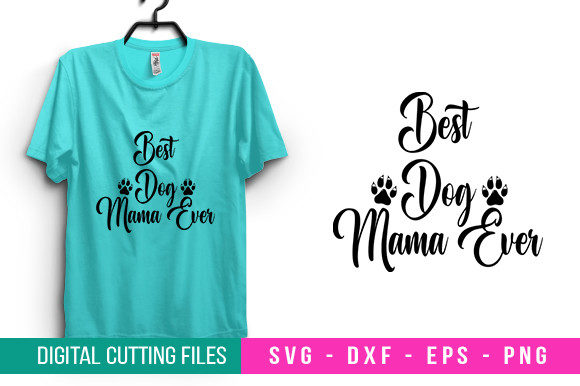
The Best Dog Mama Ever design has a straightforward, friendly personality. It does not rely on excessive detail or tiny decorative elements that cause problems during stitching. The layout feels balanced, and the lettering has enough presence to stand alone on a tote bag design or a sweatshirt embroidery without needing extra artwork around it. That is a practical advantage if you are running a small shop and need to produce finished items quickly. The mood is warm and personal, which makes it a natural fit for personalized gifts, holiday embroidery, and custom apparel for dog owners. If you are an Etsy seller looking for design assets that feel genuine rather than generic, this one has a good chance of connecting with buyers who want something that reflects their identity.
From a Graphics perspective, the file arrives in SVG DXF EPS PNG format. Before using the design, please unzip the zip file. 1st of all select the zip file and click the right button of your mouse and select. That is standard for digital files, but I always recommend checking the contents immediately to confirm you have the correct layers and formats for your workflow. I have received too many files where the vector was rasterized or the layers were flattened, so I open everything before I even load it into my embroidery software.
How Best Dog Mama Ever Performs in Real Stitching Situations
I tested this design on a midweight cotton sweatshirt, a denim tote bag, and a cotton kitchen towel to see how it behaved across different fabric textures. On the sweatshirt, the stitch density felt appropriate. The satin stitch elements held their shape without pulling the fabric, and the fill stitch areas covered evenly. I did not see any gaps or shifting that would indicate poor digitizing. On the denim tote, the design held up well because the fabric is stable enough to handle moderate density. The running stitch details remained crisp, and the overall look stayed clean even after I handled the bag roughly to simulate daily use. The kitchen towel was a bit more challenging because of the looser weave, but with a good stabilizer and proper hooping, the design still stitched out without distortion.
If you are producing handmade products for a craft fair or boutique order, you want a design that does not require constant babysitting. Best Dog Mama Ever is not a high-maintenance file. It stitches reliably, and the visual clarity holds up from a distance, which matters when customers are scanning a table of goods. I would feel confident using this on baby embroidery projects like onesies or bibs, as long as the fabric is not too thin and the backing is chosen carefully. For embroidered patch production, the design works well because the shapes are not too intricate, and the edges can be trimmed cleanly.
Where to Use This Design and Where to Be Careful
This design fits naturally on custom apparel like t-shirts, sweatshirts, and hoodies. It also works well on aprons, pillow covers, blankets, and nursery decor. If you are making personalized products for a dog rescue fundraiser or a client who wants a gift for a new dog owner, this is a safe choice. It reads clearly and does not rely on hype or trendy fonts that will look dated in a year. The design also works for printable mockup creation if you are selling digital products, because the clean layout looks good in flat lay photos and on model shots.
However, there are places where I would use this design carefully. Small hoop sizes can be a problem if the lettering or graphic elements become too compressed. If you are working with a 4x4 hoop, test the scaling first. The design may lose some of its readability if you shrink it too much. I also recommend caution on stretchy fabric like jersey knits or ribbed cuffs, because the stitch density can cause puckering if the stabilizer is not strong enough. Dark fabric requires a good thread color contrast to keep the design readable. I tested it on black and navy, and the design held up, but I had to choose a lighter thread color to maintain the visual impact. For curved surfaces like caps, the design may need a slight adjustment to avoid distortion, especially if the lettering spans a wide area. I would not recommend placing it on a cap without a test run first.
Visual Appeal, Product Value, and Customer Trust
One of the reasons I keep coming back to this design for commercial embroidery is how it affects the perceived value of the finished product. When a customer sees a clean, well-stitched design on a handmade product, they associate the quality with the entire brand. Best Dog Mama Ever does not look like a rushed clip art import. It has a considered layout that feels intentional. That translates to customer trust and higher buyer engagement in your shop. If you are an Etsy seller or run a small shop, you know that the difference between a sale and a scroll past often comes down to how polished the product looks in the listing photo. This design, when stitched well, makes a product look giftable and professional.
For brand consistency, the design is neutral enough to fit into a range of color schemes and product lines. It does not force you into a specific aesthetic. That is useful if you sell across multiple categories like personalized gifts, holiday embroidery, and baby embroidery. The design also works well in black and white mockups, which is helpful for testing contrast before you commit to thread colors. I always run a monochrome version of any new design to see how the shapes read without color distraction. This one passed that test easily.
Practical Embroidery Designer Notes Before You Stitch
Before you load this file into your machine, here are a few steps I take every time I work with a new embroidery file:
- Test the design on scrap fabric first. Even if the file looks clean in the preview, fabric changes everything. I use a piece of fabric similar to the final product to test stitch quality, tension, and coverage.
- Check thread color contrast. Open the design in your software and swap thread colors to see how it will look on light and dark backgrounds. A design that looks great on white may disappear on charcoal.
- Review stitch density. If the stitch density is too high for your fabric, you may need to adjust the design or change your stabilizer. I always check the density before stitching a production run.
- Confirm hoop size. Make sure the design fits comfortably in your hoop without being squeezed to the edges. Leave at least a half inch of clearance around the design for proper hooping.
- Inspect small details. Look for any tiny elements that might not stitch cleanly. If the design has thin lines or small text, zoom in and decide if they will hold up at the size you plan to use.
- Test in black and white mockups. This helps you see the design's structure without color bias. If it looks good in grayscale, it will likely look good in color.
- Compare light and dark fabric backgrounds. Some designs are digitized for one fabric type and fail on another. Test both to avoid surprises during a client order.
- Use proper stabilizer. For custom apparel, I use a tear-away for stable fabrics and a cut-away for knits and stretchy materials. The wrong stabilizer can ruin a perfectly good design.
- Check licensing. The file is provided as SVG DXF EPS PNG. Before using the design, please unzip the zip file. 1st of all select the zip file and click the right button of your mouse and select. Confirm whether the license allows commercial embroidery and selling finished items. If you are a digital product seller, verify whether you can resell the file as part of a printable mockup or design assets bundle. I do not assume anything until I see the terms.
- Test the design in your actual workflow. Load it into your machine, stitch it out, and inspect the result. That is the only way to know if it is ready for finished product use.
Final Thoughts on Best Dog Mama Ever for Your Craft Business
If you are a maker, hobbyist, or creative entrepreneur looking for a reliable machine embroidery design that works across handmade products, personalized gifts, and custom apparel, Best Dog Mama Ever is a solid addition to your library. It does not try to be everything at once, which is a strength. It knows what it is and delivers on that promise without overcomplicating the stitching process. Whether you are preparing a batch of embroidered patches for a craft fair, creating a tote bag design for a small shop, or stitching a sweatshirt embroidery for a client who wants something personal, this design holds its own. The Crafts category is crowded with designs that look good on screen but fail in the hoop. This one does not have that problem. Take the time to test it, choose your thread colors wisely, and pair it with the right stabilizer, and you will have a product that feels finished and professional.